
Why a Paver Driveway in Knoxville, TN Outlasts Concrete in a Climate That Tests Every Surface
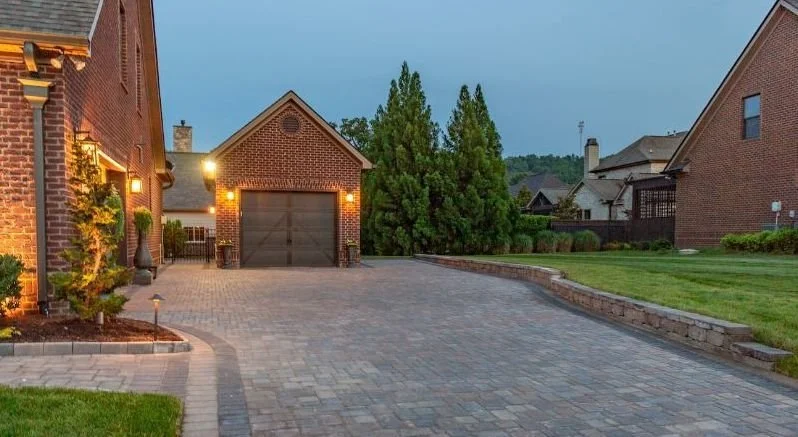
The driveway takes more abuse than almost any other surface on the property. Vehicle weight, daily traffic, exposure to sun and rain, and in East Tennessee, a freeze-thaw cycle that runs from December through March.
Concrete handles that abuse for a while. A paver driveway handles it for decades, and the difference comes down to how each system responds when the ground beneath it inevitably moves.
For homeowners in Knoxville, TN, considering a driveway replacement or new installation, understanding why pavers outperform concrete in this specific climate makes the decision easier.
Related: How a Paver Patio Performs in East Tennessee When the Base Is Built for What Sits Beneath It
Why Does Knoxville's Climate Punish Concrete So Hard?
Concrete is a single, rigid slab. When the red clay soils beneath it expand and contract with moisture, which happens constantly through East Tennessee's wet winters and dry summer stretches, that slab has nowhere to flex. The result is cracking.
Once a crack forms, water gets in, freezes during the winter months, expands, and widens the damage with every cold cycle that follows.
Concrete repairs are also difficult to disguise. A patched section rarely matches the surrounding slab's color or texture, which means even a successful repair leaves a visible scar across the driveway.
How Does a Paver Driveway Handle the Same Conditions Differently?
A paver driveway is not one rigid structure. It is a system of individual units that move independently over a properly engineered base.
When the clay soil beneath shifts, the pavers shift with it in small, isolated ways rather than transferring that stress into a single crack-prone surface. The joints between pavers absorb movement that would otherwise crack a solid slab.
This flexibility is also why repairs are so much simpler. If a section of paver driveway is damaged, a contractor lifts the affected pavers, addresses what is happening underneath, and resets them, with no visible patch and no mismatched color.
What Does a Knoxville Paver Driveway Need Beneath the Surface?
The pavers themselves are not what determines longevity. The base is. A driveway base needs to be excavated to the proper depth, filled with a compacted aggregate layer, and graded for drainage before a single paver goes down. In Knoxville's red clay, skipping or shortcutting this step is the most common reason a paver driveway underperforms.
Proper drainage matters just as much as compaction. Water that pools beneath a driveway saturates the clay subgrade and accelerates the expansion and contraction cycle that pavers are otherwise built to withstand.
A driveway designed with grading and drainage in mind sheds water away from the base instead of trapping it underneath.
Related: Outdoor Living in Knoxville, TN, Designed for a Better Summer at Home
What Should Homeowners Expect From a Properly Built Paver Driveway?
A paver driveway built on a properly prepared base in Knoxville, TN, should perform for decades with minimal maintenance beyond occasional joint sand replenishment and periodic sealing.
Integrity Lawn & Landscaping backs every hardscape installation with a five-year warranty, reflecting confidence in both the materials selected and the construction process behind every project.
Nearly 30 years of building hardscapes across Knoxville, Farragut, Maryville, and the surrounding area has shown the Integrity team exactly what East Tennessee's soil and climate demand from a driveway built to last.
Ready for a Driveway That Outlasts the Climate?
A paver driveway built correctly for Knoxville's conditions delivers decades of performance that concrete simply cannot match.
Schedule a consultation with Integrity Lawn & Landscaping and start planning a driveway built for the long term.
Related: Creating a Golden-Hour Mood: Fire Pit & Outdoor Lighting Trends in Alcoa, TN
